railcar system webapp redesign
date:
apr 2023
timeline:
7 months
industry:
manufacturing
role:
analyst and ux designer
team:
david bissinger (pm)
tools:
figma, ms suite, lucidchart, miro
during my internship at oregon steel mills (formerly evraz), i served as the sole designer in the company and contributed to 3 cross-departmental projects, leading ideation processes and prototyping efforts.
this case study highlights the railcar system webapp redesign, where i spent most of my time.
the existing railcar management tool was outdated and relied heavily on expert knowledge, leading to inconsistent data entry, limited visibility, and extensive manual filtering. as ux designer and analyst, i led and delivered the final prototype from research and problem framing to final stakeholder presentations.
problem
the current tool is outdated and no longer fits users' needs. operators from the shipping department must rely on expert knowledge to manually filter data before any real work can begin, creating delays and inconsistencies at times. this lack of system support also limits visibility for other stakeholders, who cannot easily view or track the progress of an order.
goals & metrics
what does success look like?
we aim to modernize the tool to match users' workflows, reduce manual filtering and reliance on expert knowledge, and provide clearer visibility across the order lifecycle.
for a concept design project, success was evaluated through prototype testing and stakeholder feedback, such as the reductions in the number of steps/clicks needed to locate key information, clearer task flows for non-operators, and user satisfaction.
role
analyst and ux designer
originally hired as a data analyst, i transitioned to lead ux/ui design effort to identify and solve internal software tool inefficiencies. during the internship period, i participated in 3 projects and collaborated with 4 departments to deliver prototypes.
for this project, i assisted user research and problem formulation. i reorganized tables for more accessible data retrieval, and created kpi visualizations to support faster decision-making. i redesigned the overall user experience and interface to make the tool more intuitive and interactive.
approach
how are we tackling this problem?
user research and problem formulation
assisted the project manager in conducting user interviews with the shipping department to pinpoint workflow inefficiencies and gather requirements for an improved solution.
solution ideation
brainstormed approaches to reorganize data tables hierarchies and conceptualized an all-in-one webapp with opportunities for future expansion and department-specific customization.
prototyping and testing
redesigned the ux/ui to support clearer navigation and more meaningful interactions. conducted biweekly testing sessions with shipping operators to ensure the prototype aligned with their needs and validated proposed workflows.
final presentation
presented the final concept to executives and teams across shipping, production planning & control (pp&c), and IT, receiving positive feedback and support for future implementation.
iterations
ux architecture
[new information architecture flowchart]
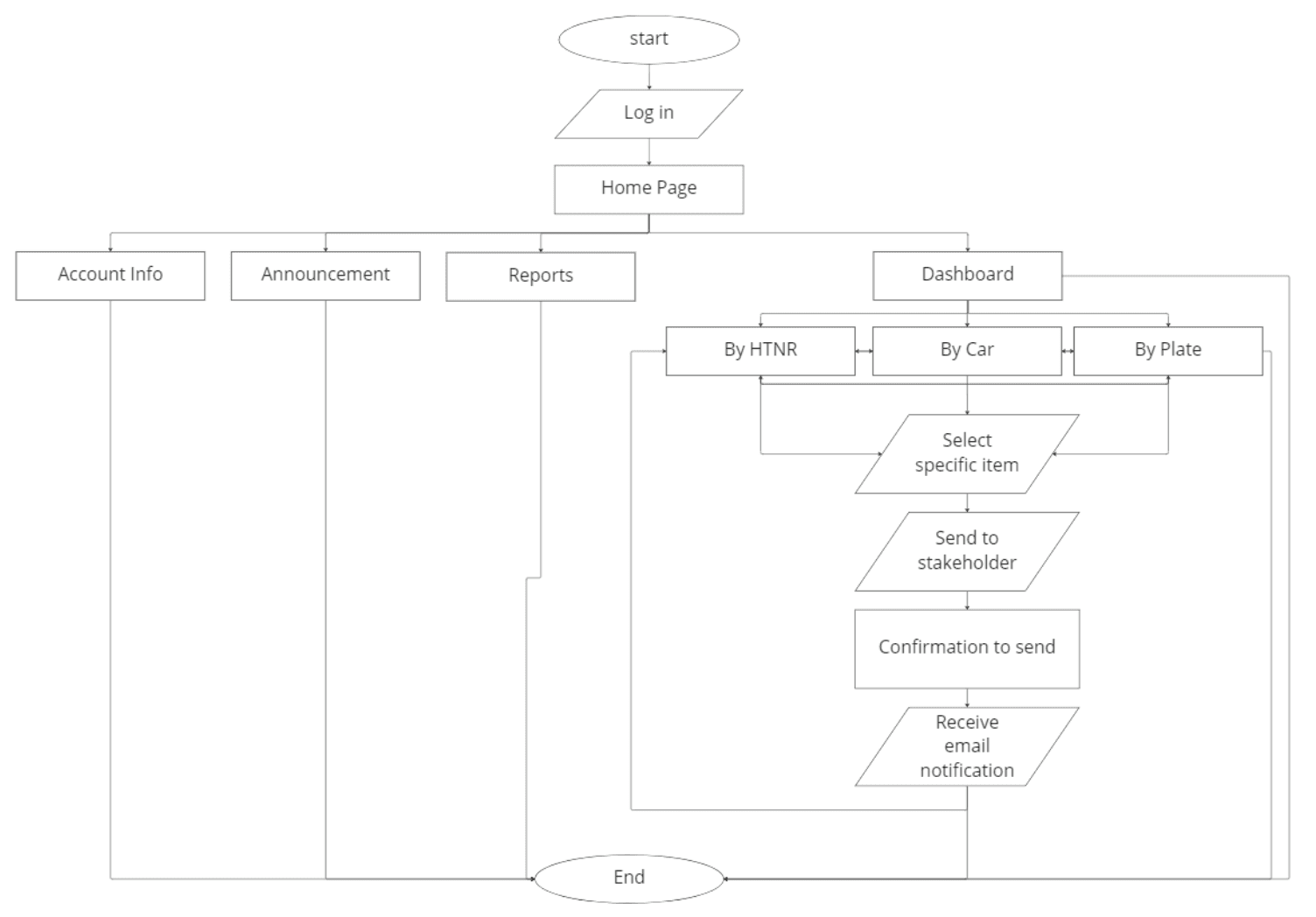
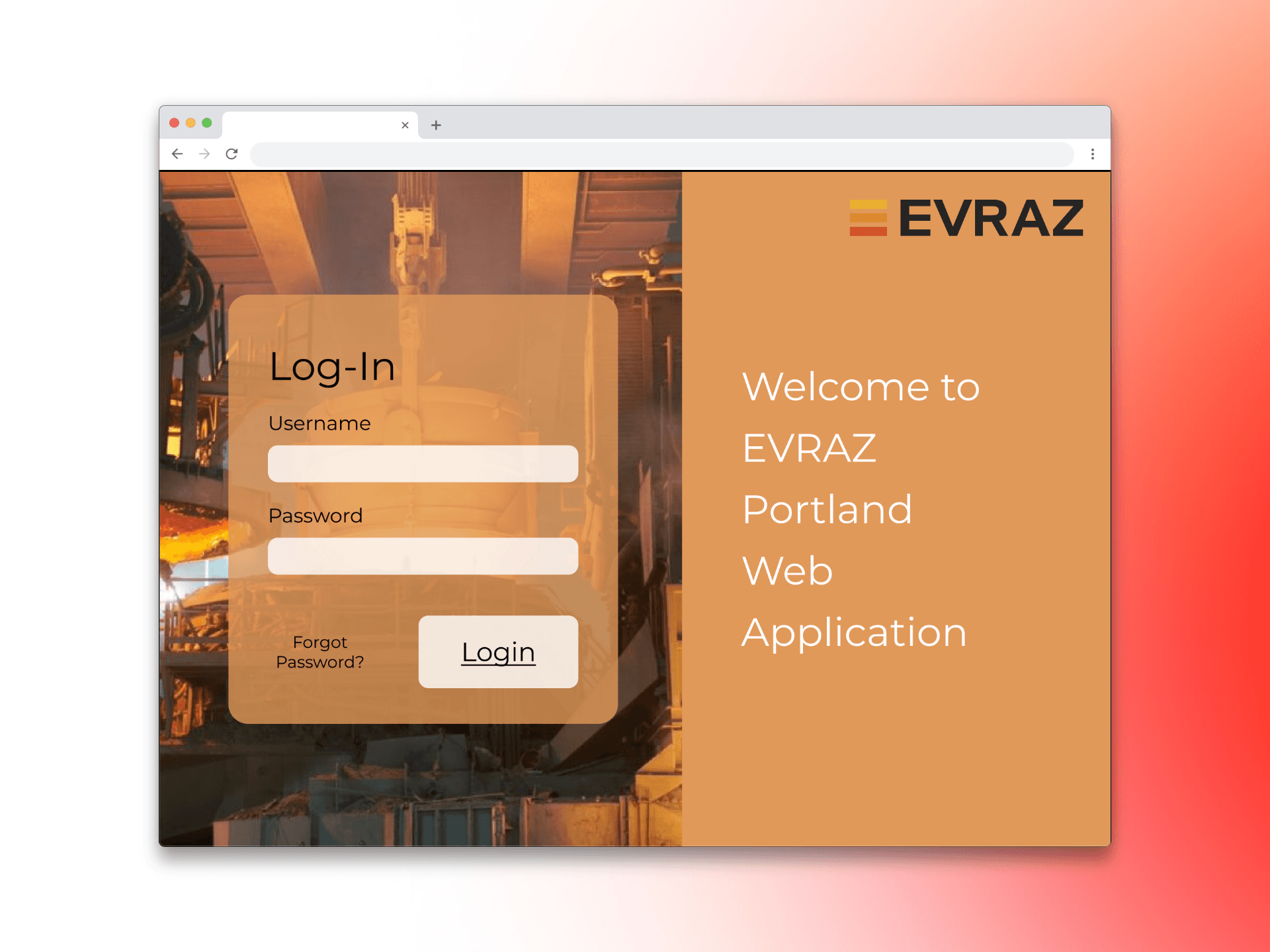
the redesigned system includes a login landing page and a home dashboard that surfaces key information at a glance.
existing data is organized into three interconnected views: by htnr (heat number), by car, and by plate. this allows users to navigate seamlessly across tables.
users can also apply filters directly within the system and select specific items to assign to stakeholders through an integrated outlook-linked feature.
wireframes
[wireframe: home page dashboard]
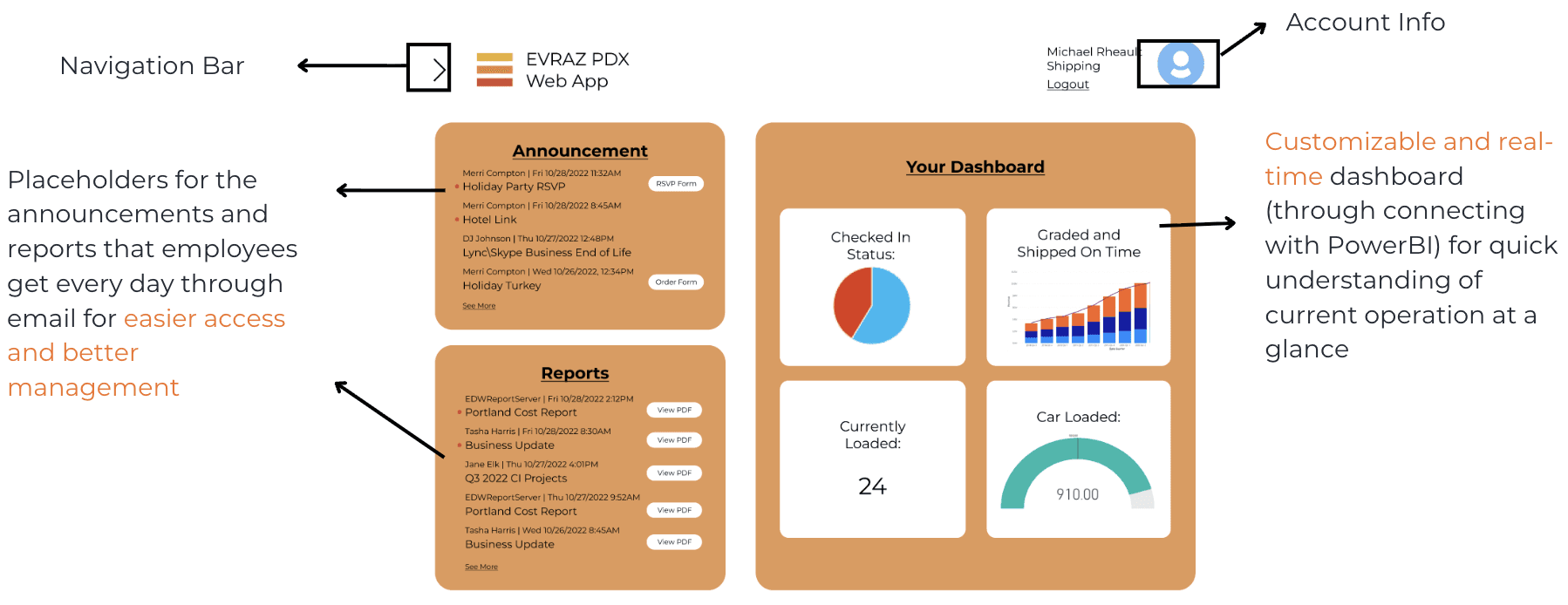
i designed the home dashboard with key kpis surfaced at a glance to help users quickly understand the data and current operational status.
noticing the lack of an integrated intranet system and experiencing firsthand how important updates easily got buried in emails, i decided to expand the concept into an all-in-one application that also consolidates reports and announcements.
by highlighting essential messages directly on the dashboard, the tool ensures that critical information stays visible and accessible to the teams who rely on it.
users could also customize what they want to see on the dashboard in the account info page.
[wireframe: by htnr]
[wireframe: by htnr, expanded view]
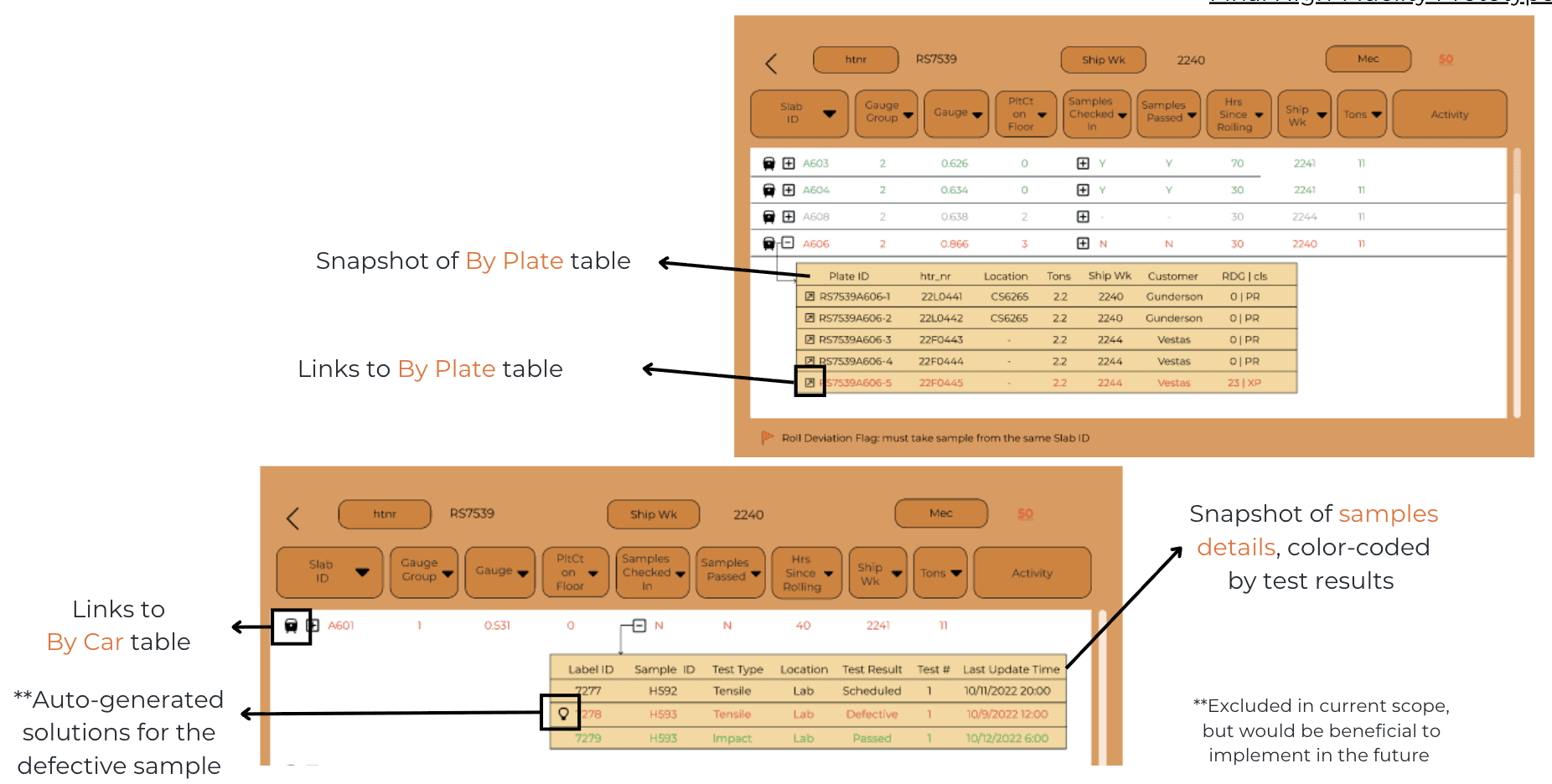
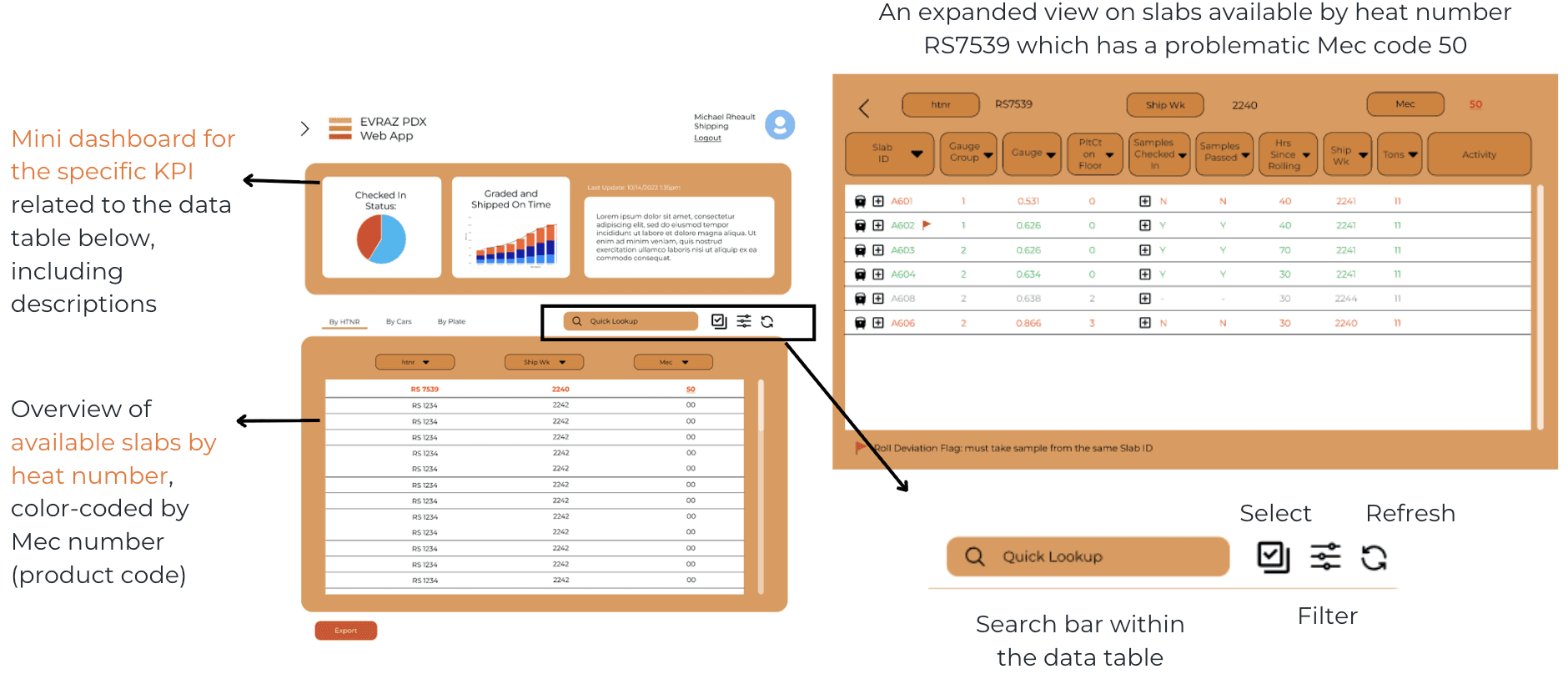
within the by htnr view, users can access a mini kpi dashboard specific to that dataset.
the table can be expanded to display all slabs associated with a heat number, and further expanded to reveal the related railcar and plate information.
this layered structure allows users to drill down from high-level metrics to detailed operational data in a clear, intuitive flow.
[wireframe: by car]
[wireframe: by plate]
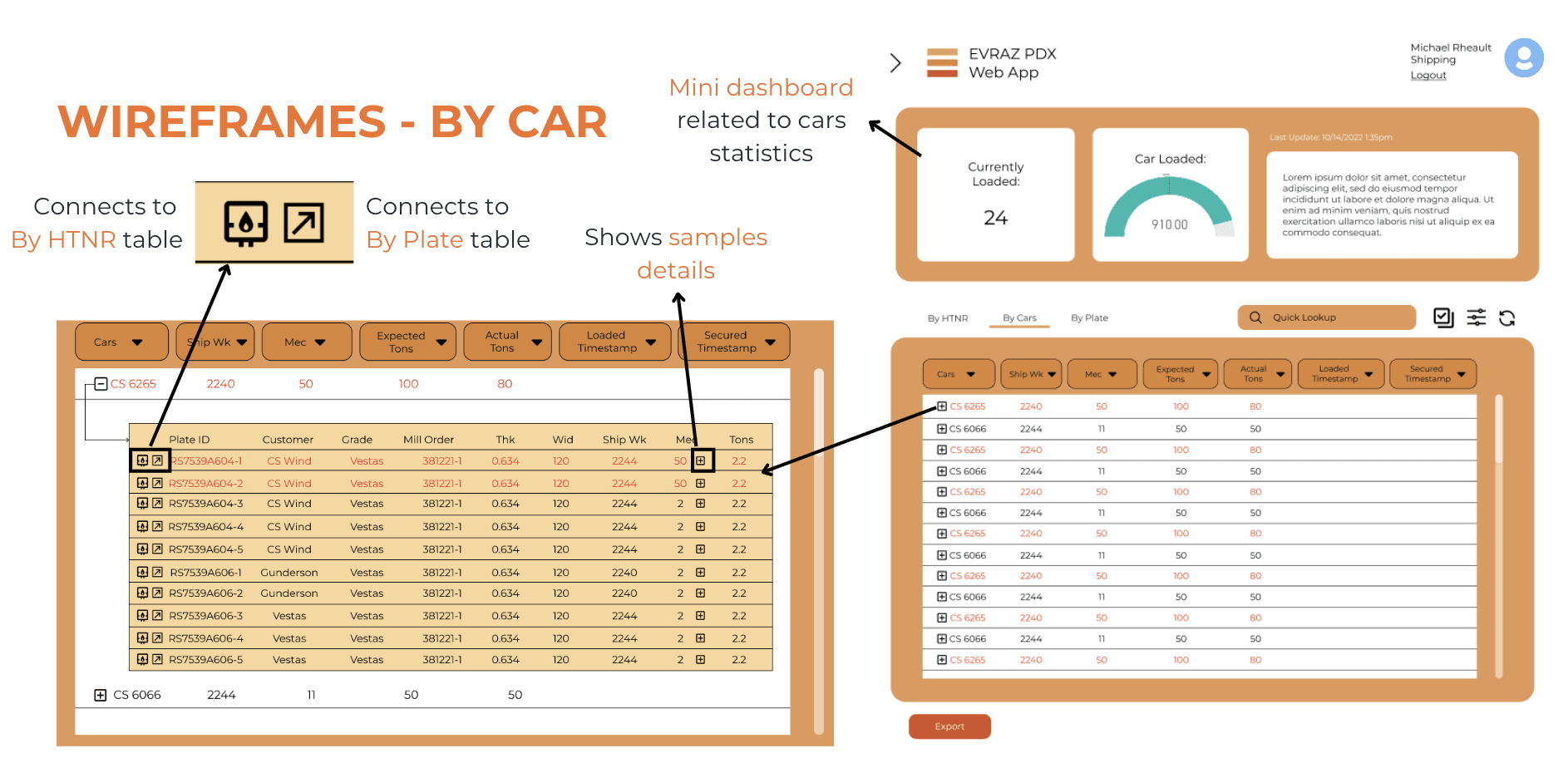
the 'by car' view lets users to see what order is supposed to be on each car and expand entries to see linked heat numbers and plates.
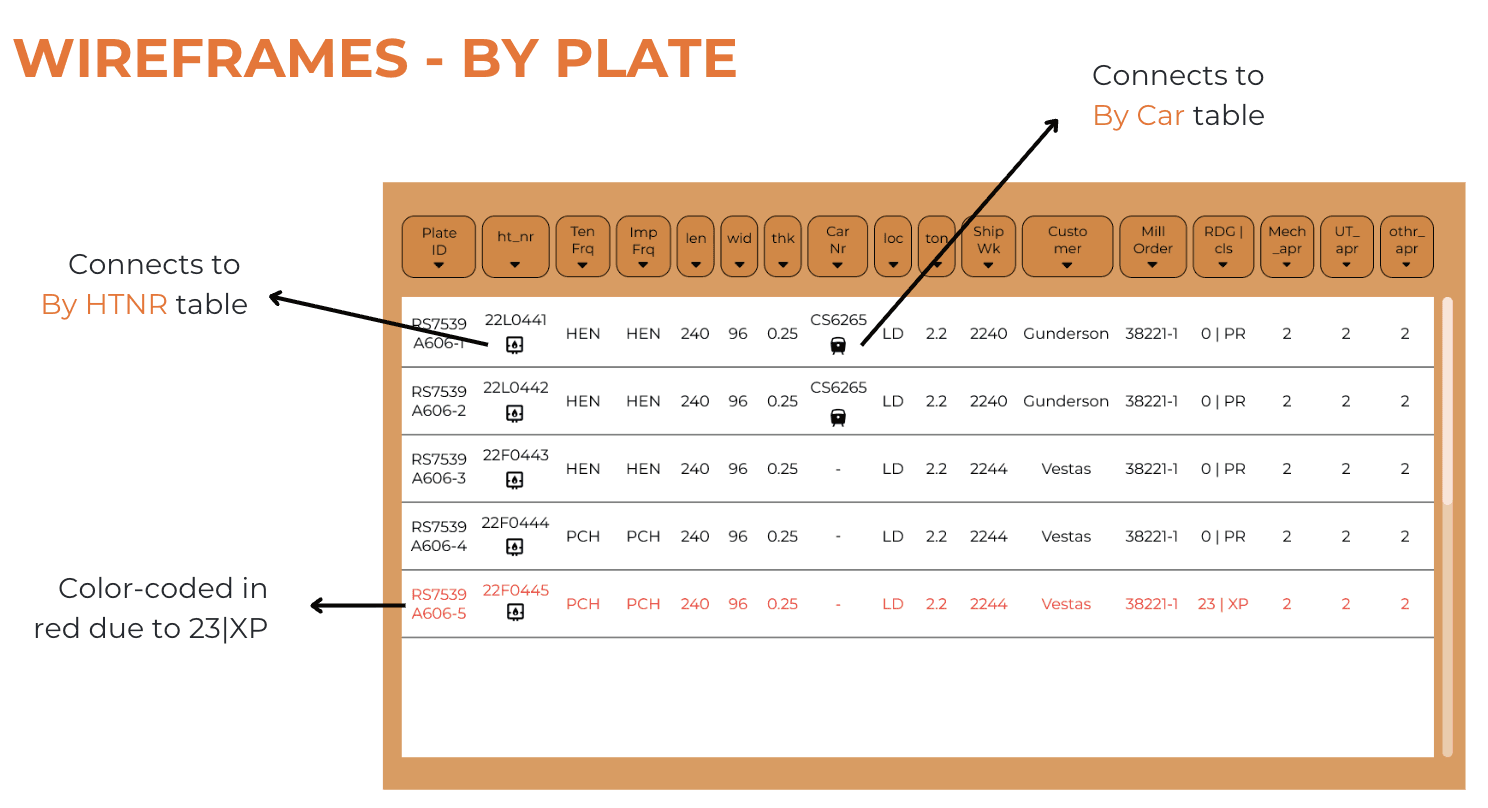
the 'by plate' view provides plate-level details with the ability to trace each plate back to its associated heat number and railcar.
together, these views offer clear, drill-down visibility across the entire railcar–heat–plate hierarchy.
final prototype
impact
what did we achieve?
the redesigned concept demonstrated how a clearer data hierarchy, integrated dashboards, and streamlined workflows could significantly reduce manual filtering and reliance on expert knowledge.
prototype testing showed faster information retrieval, improved consistency in data entry, and greater visibility for non-operators across the order lifecycle.
the clarity and usability of the proposed system gained strong support from executives across departments, influencing IT's ongoing updates to the existing web applications and shaping the direction of future development.
conclusion
what have i learnt?
this project offered a meaningful opportunity to apply and test my ux design skills in a real industrial environment. through continuous testing with end users, i combined analytics with human-centered design to create solutions with minimal guidance.
takeaway
future opportunity
at the time of the project, the IT department was currently updating the existing railcar system using the data structure and workflows proposed in the prototype. with strong positive feedback from department leads, there is potential for the redesigned application to move into development and eventually be adapted for company-wide use.